

Planning to drive the Icefields Parkway? Here are the best stops between Banff and Jasper, with waterfalls, hikes, glacier views, and scenic lookouts you won’t want to miss.
I’d seen photos of the Icefields Parkway before my trip – dramatic peaks, turquoise lakes, maybe a bear in the distance – but nothing quite prepared me for what it felt like to actually drive it. Every turn seemed to reveal a new, impossible view. This stretch of highway between Lake Louise and Jasper is often called one of the most beautiful drives in the world, and honestly, I get it now. It’s not just the mountains, it’s the way they surround you, pull you in, and make you feel small in the best possible way.
I drove it as part of my six-day Alberta road trip, and it quickly became one of the highlights. Not because I rushed through it, but because I gave myself time to stop, to explore, to breathe.
In this post, I’m sharing the best stops along the Icefields Parkway, from quiet lakes and powerful waterfalls to the kind of viewpoints that make you question if this place is even real. If you’re planning to drive it yourself, here’s exactly what not to miss.
Don’t forget to check out all of my Alberta blog posts to make the most of your roadtrip!
Where the Icefields Parkway Starts and Ends
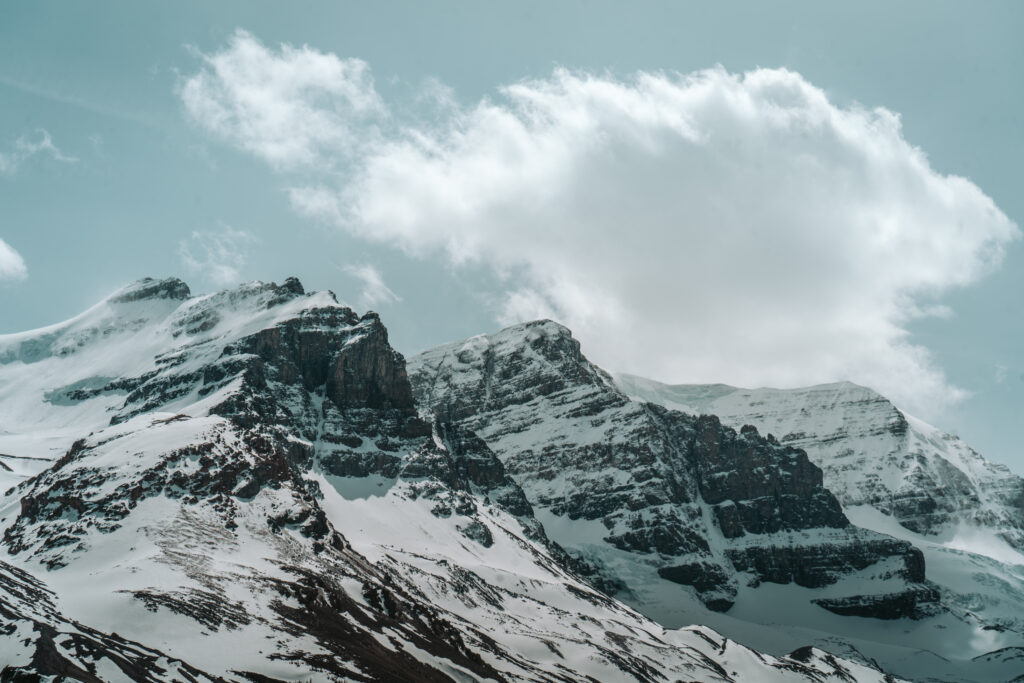
The Icefields Parkway is a scenic stretch of Highway 93 that runs between Lake Louise in Banff National Park and Jasper in Jasper National Park. It covers about 230 kilometers (143 miles) of pure mountain magic and it’s easily one of the most beautiful drives in all of Canada. You’ll pass countless glaciers, turquoise lakes, waterfalls, and wide-open valleys, with towering peaks lining the road on both sides. And unlike many scenic drives that feel like they have “a few good stops,” this one feels like it never lets up.
Here are a few things to know before you hit the road:
- Driving Time: You could drive it in 3 hours without stopping but trust me, you won’t want to. Plan a full day to explore the best stops.
- Direction: It can be done either way, but most people drive south to north (from Lake Louise to Jasper), which is what I did.
- Park Pass: Since the route passes through both Banff and Jasper National Parks, you’ll need a valid Parks Canada pass. If you’re planning multiple park visits, the “Discovery Pass” is your best bet.
- Gas & Cell Service: There’s no gas between Lake Louise and Jasper except for a single station at Saskatchewan River Crossing. And no cell signal for most of the drive, download your maps before you go.
Best Stops on the Icefields Parkway
Bow Lake
If you’re starting your drive from Lake Louise or Banff, Bow Lake is likely to be your first stop, and what an introduction it is. The lake sits right off the highway, framed by dramatic peaks and usually known for its turquoise water and perfect reflections. It’s one of those stops that makes you pull over even if you hadn’t planned to.
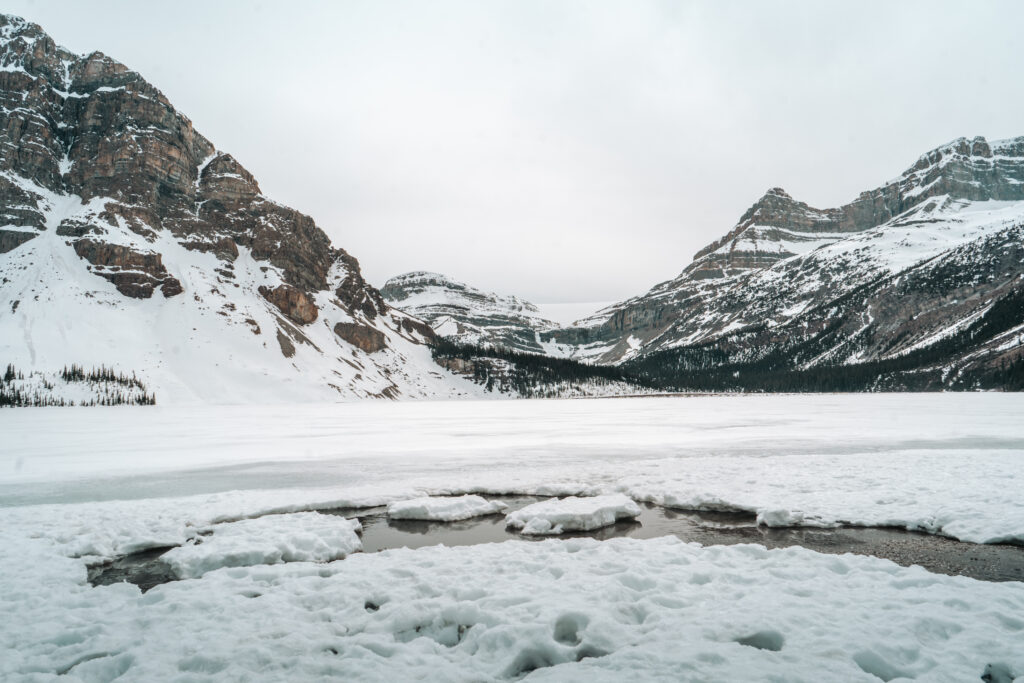
For me, Bow Lake was actually the last stop on my Icefields Parkway drive. I visited in early May, and the lake was still mostly frozen and covered in snow. I didn’t get to see the iconic blue water, but honestly, that didn’t make it any less impressive. There was something about the snow-covered stillness, the soft crunch under my boots, and the silence of that late spring moment that made it just as memorable.
There’s a small parking area just off the highway and a path that leads down toward the water. If you’re visiting later in the season, it’s a great spot to walk along the shoreline or even stop for a picnic. But even early in the year, it’s a peaceful place to pause.
If this is your first stop, it sets the tone for the beauty that’s ahead. If it’s your last, like it was for me, it’s the kind of place that makes you stop one more time — just to soak in the quiet.
Peyto Lake Lookout
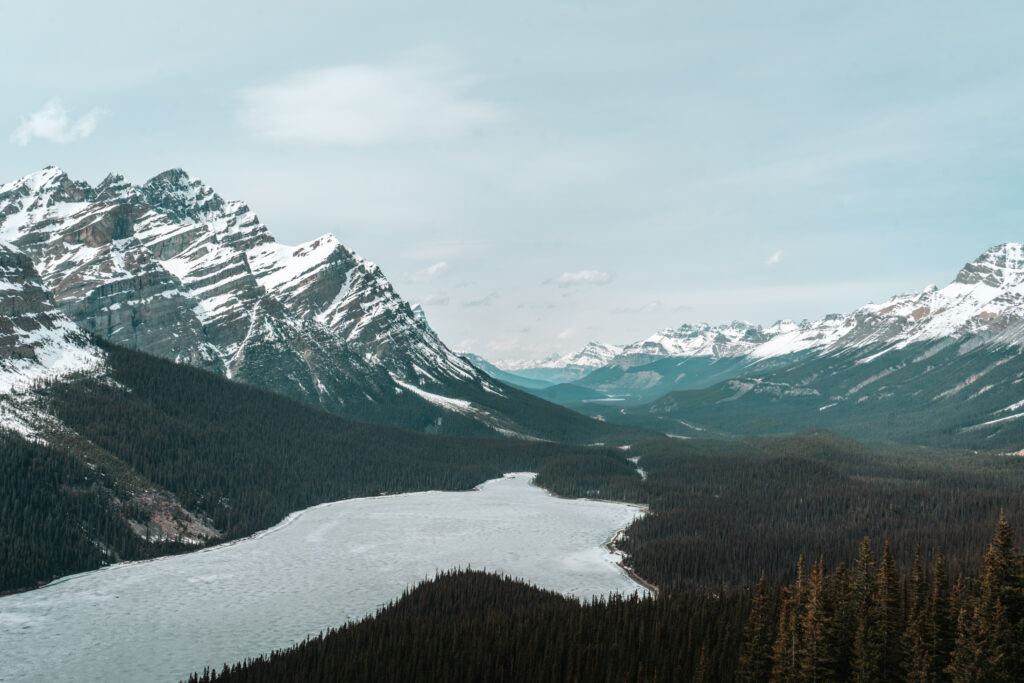
Peyto Lake is easily one of the most iconic views along the Icefields Parkway, you’ve probably seen photos of it without even realizing. The viewpoint is just a short, paved walk from the parking lot (less than 10 minutes but steep), and the new viewing platform makes it super accessible. Most people visit between June and September when the lake is its brightest blue, but I visited in early May, and let me tell you: it was a very different kind of beautiful.
The trail was still walkable (although icy), but the lake itself was completely frozen over, with snow covering most of the surrounding landscape. I didn’t get the classic view – no turquoise water, no contrast between land and lake – but I also didn’t have to share the platform with anyone. It was quiet, windswept, and honestly kind of surreal to see it in that state.
If you’re visiting early in the season, just know you may not catch the famous color, but that doesn’t mean it’s not worth stopping. The view is still expansive, and the silence of shoulder season has its own kind of magic.
Columbia Icefield & Athabasca Glacier
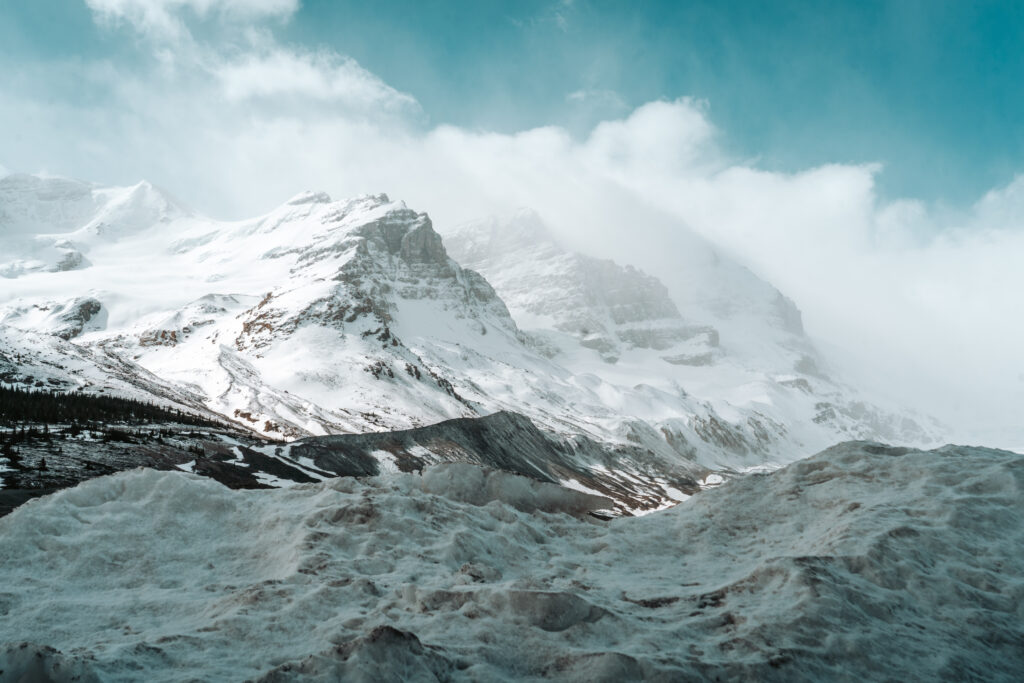
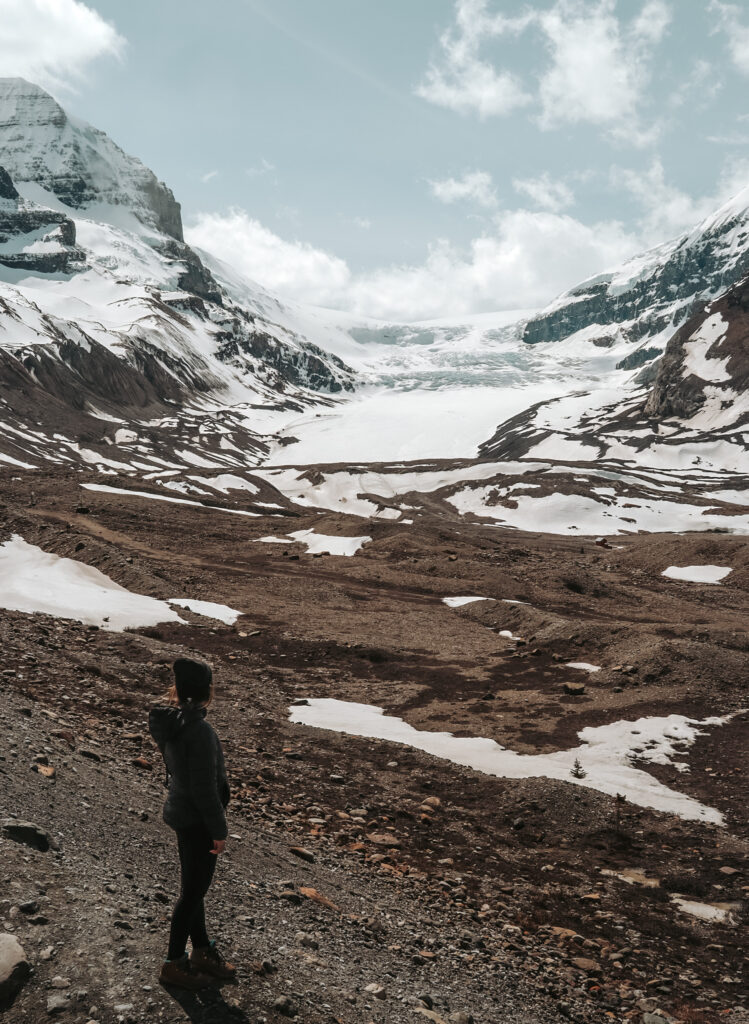
This stop was one of the most surreal parts of the entire Icefields Parkway, the kind of place that makes you feel like you’ve stepped onto another planet. The Athabasca Glacier sits right at the edge of the highway, part of the massive Columbia Icefield, and it’s one of the most accessible glaciers in North America.
There are a few different ways to experience it. You can pull over and take a short walk to the toe of the glacier on your own, or you can book the Columbia Icefield Adventure like I did : a guided experience that takes you out onto the ice in a giant Ice Explorer vehicle. Standing out there, with nothing but snow and stone around you, is something I won’t forget anytime soon.
If you’re planning a visit, I highly recommend doing the full experience. The tour also includes the Glacier Skywalk, a glass-floored viewing platform suspended above the Sunwapta Valley (don’t worry, we’ll get to that in a second).
This stop is 100% worth including on your Icefields Parkway drive, even if you only have time to pull over and look up.
Read more // Don’t forget to read my full review of the Columbia Icefield Adventure !
Glacier Skywalk
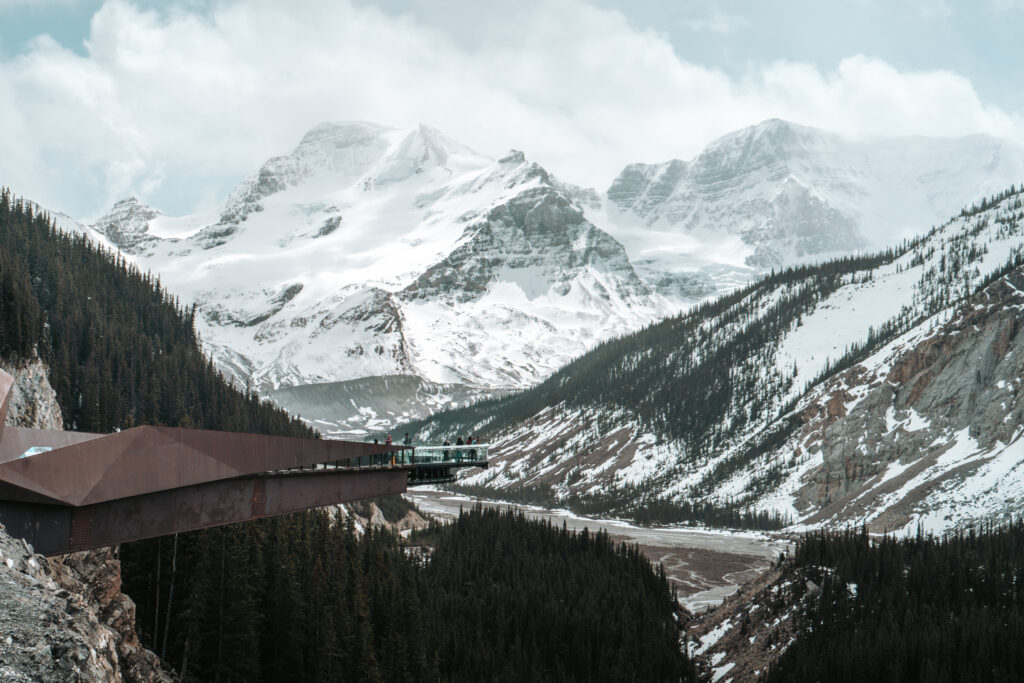
Just a few minutes north of the Columbia Icefield Centre, the Glacier Skywalk offers a completely different kind of perspective. This glass-floored walkway extends out over the edge of the Sunwapta Valley, giving you sweeping views of cliffs, glaciers, and riverbeds far below.
Now, if you’re not a fan of heights, this one might push your limits, but I still think it’s worth considering. The architecture is impressive, the views are wide open, and the feeling of standing on glass with that kind of drop below you is something you don’t get every day.
Access to the Skywalk is included with the Columbia Icefield Adventure tour, and you’ll get dropped off there after your time on the glacier. If you’re short on time or skipping the full tour, you can still book the Skywalk on its own through Pursuit.
I wasn’t sure what to expect going in, but I’m glad I didn’t skip it. Even with a bit of wind and early May chill in the air, the views were wild, and it felt like the perfect follow-up to being out on the glacier just minutes before.
Sunwapta Falls
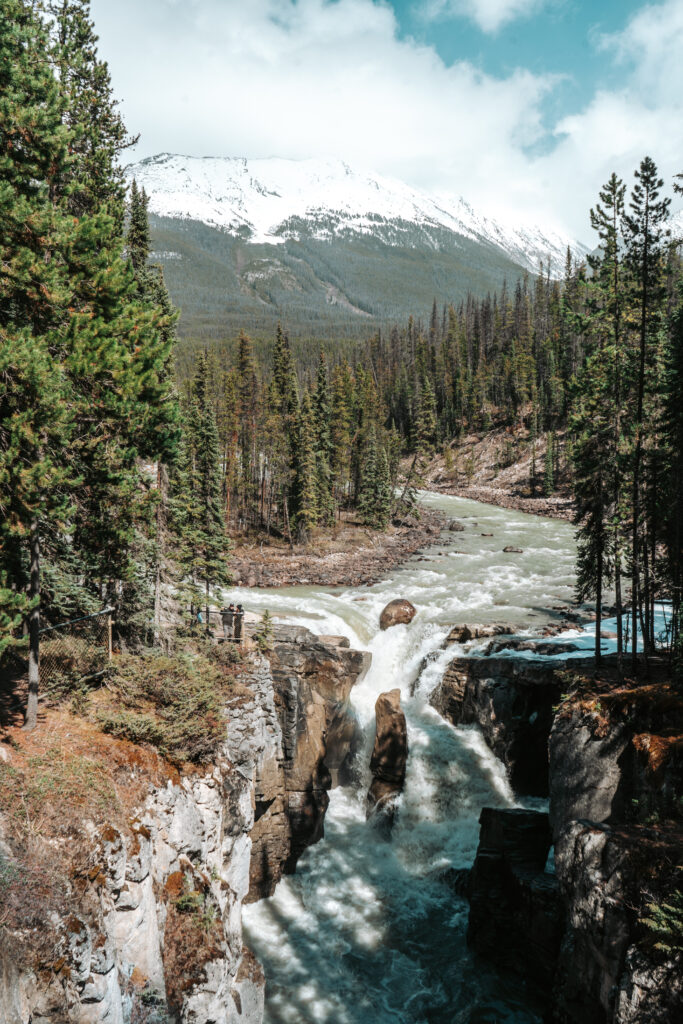
By the time I reached Sunwapta Falls, the landscape had shifted. The snow was gone, the trees were greener, and everything felt a little more open. This spot is just off the highway, with the main viewpoint only a few steps from the parking lot — making it one of the easiest and most rewarding stops on the Icefields Parkway.
The falls themselves are dramatic: glacier-fed waters from the Athabasca River rushing into a deep canyon with incredible force. It’s loud, powerful, and the kind of place that makes you want to just stand and watch for a while.
While most people stick to the main bridge area, I’d recommend following the short trail down to the lower falls if you have time. It’s quieter, slightly more rugged, and gives you a different angle on the landscape.
I hadn’t expected to feel so drawn in by this stop, but the energy here – all that water, movement, and space – made it one of my favorites of the day.
Athabasca Falls
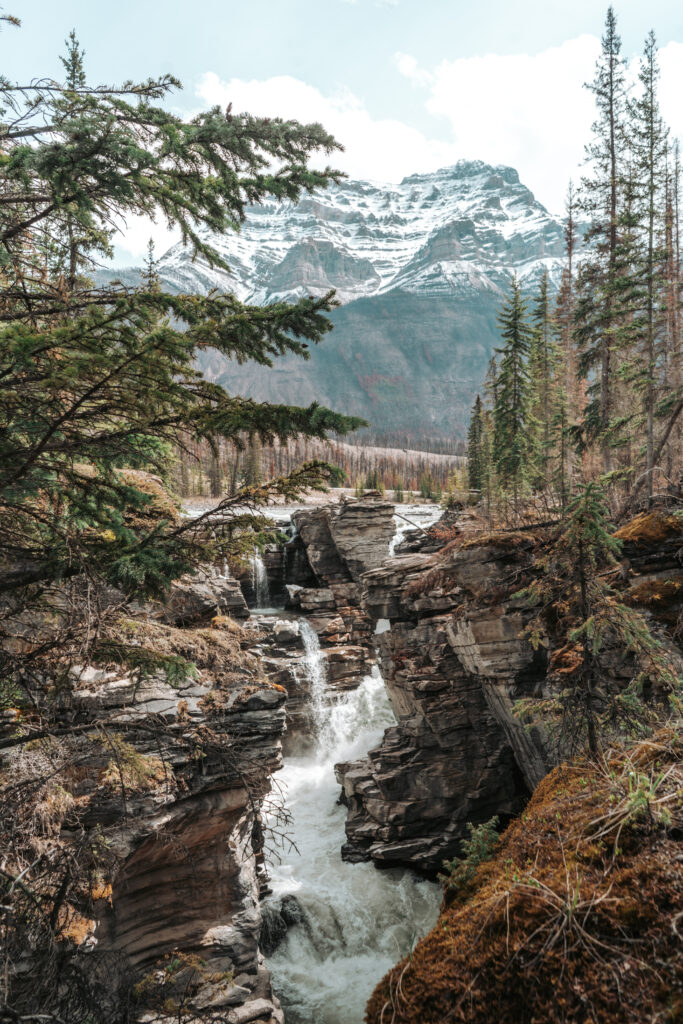
This was my very first stop on the Icefields Parkway, and honestly, I don’t think I could’ve asked for a more powerful way to kick off the day. Located just a short drive south of Jasper, Athabasca Falls isn’t the tallest waterfall along the Parkway, but it’s easily one of the most forceful. Fed by glacial meltwater from the Columbia Icefield, the falls crash through a narrow gorge with a sound that completely takes over the landscape. You can hear it before you even get out of the car.
There’s a well-maintained trail that loops around the canyon, with multiple viewpoints offering different perspectives of the falls and the rocky chasm they’ve carved out. When I visited in early May, everything was already thawed and the water was thundering. It was dramatic in the best way.
If you’re starting your Icefields Parkway adventure from Jasper like I did, this stop sets the tone: wild, bold, and unforgettable. And if you’re coming from Banff, this is where you’ll likely see the first visible impact of the wildfire that swept through Jasper in July 2024 : charred trees lining the hillsides, a stark reminder of how quickly landscapes can change.
I stayed longer than I planned, letting it all sink in before continuing down the road, and honestly, it was the perfect beginning.
Read more // Check out my full blog post on what to do in Jasper National Park in one day.
Extra Stops (If You Have Time)
If you’re starting early or planning to stretch this drive out over a full day (or two), there are plenty of other stunning places to pull over. These stops are easy to access and can be added depending on your timing and interests:
Herbert Lake
Just minutes after leaving Lake Louise, this small lake is a peaceful stop, especially at sunrise. On calm mornings, the reflection of the mountains in the still water is photo perfection.
Waterfowl Lakes
Another quick pull-off spot with epic views. You won’t need much time here, but the colors and backdrop are classic Rockies.
Mistaya Canyon
An easy 10-minute walk from the parking lot brings you to a twisting canyon carved out by glacial water. It’s lesser-known, so it tends to be quieter than Sunwapta or Athabasca.
Tangle Creek Falls
You don’t even need to park for this one, it’s right by the roadside, and in spring, the water cascades down in multiple levels. Just be careful pulling off here, as there’s limited space.
Big Bend Viewpoint
The road here curves in a massive arc with panoramic views of the surrounding peaks. It’s a beautiful pull-off for photos and a great place to just stop and breathe.
Tips for Driving the Icefields Parkway
The Icefields Parkway isn’t just a scenic highway, it’s an experience. But like any road trip through the Rockies, there are a few things to keep in mind to make the most of your day:
Fuel Up Early
There’s only one gas station between Jasper and Lake Louise — at Saskatchewan River Crossing — and prices there are steep. Top up your tank before you leave either end of the parkway.
Download Your Maps
There’s no cell service for most of the drive. Be sure to download offline Google Maps or use a GPS app that works without service.
Expect Changing Conditions
Even in late spring or summer, weather in the Rockies can change fast. Pack layers, I went from snow-covered trails to sunny viewpoints in the span of a few hours.
Start Early
This drive can technically be done in three hours without stopping, but that’s not the point. Plan for a full day to explore the best stops without rushing.
Bring Your Park Pass
The parkway crosses through both Banff and Jasper National Parks, so a Parks Canada pass is required. If you’re visiting multiple parks, the Discovery Pass offers the best value.
Bring Snacks or a Picnic
There are very few places to grab food along the parkway. Pack lunch, snacks, and plenty of water, especially if you’re hiking or joining a glacier tour.
Be Bear Aware
This is bear country, especially in spring and early summer. Keep a safe distance if you spot wildlife, and never leave food out at viewpoints or trailheads.
FAQs About Driving the Icefields Parkway
Do I need a special vehicle to drive the Icefields Parkway?
Nope! The road is fully paved and well-maintained. A regular car is totally fine, even in May, I had no issues. Just check road conditions in advance if you’re visiting early or late in the season.
Is the Icefields Parkway open year-round?
Yes, but it can close temporarily in the winter due to snow or avalanche risk. If you’re visiting between late October and April, check for closures on the Parks Canada website before heading out.
Can I do the Icefields Parkway as a day trip?
Yes, and that’s exactly what I did. I drove it as a full-day trip from Jasper to Lake Louise. If you have more time, staying overnight near the Columbia Icefield or at one of the wilderness lodges gives you the chance to go slower.
Are there bathrooms along the way?
There are basic restroom facilities at most major stops like Peyto Lake, the Columbia Icefield Centre, and Athabasca Falls. Don’t expect full-service rest areas, but you won’t be totally out of luck either.
Can I see wildlife on the Parkway?
Yes, and you probably will! I saw mountain goats, elk, and I know people often see black bears. Drive slowly, especially in the early morning or evening, and never feed wildlife.
Final Thoughts: A Drive I’ll Never Forget
Driving the Icefields Parkway had been on my bucket list for years, but nothing could’ve prepared me for how it actually felt to be there. I visited in early May, when snow still lingered on the trails, the lakes were just starting to thaw, and the peaks felt even more dramatic against the shifting skies.
I started from Jasper, with no real sense of how much the day would give me. By the time I reached Bow Lake, hours later, I had stopped more times than I could count, not just for the big highlights, but for quiet moments that caught me by surprise: a frozen lake, a powerful waterfall, the eerie silence around a glacier.
This drive isn’t just about the views (although they’re incredible). It’s about the pace it encourages, the space it creates for stillness, and the kind of awe that stays with you long after the trip is over.
So if you’re planning a trip to Alberta don’t skip this drive. Give it a full day. Pack snacks, charge your camera, and leave space in your itinerary to be amazed.
Because some roads really do live up to the hype.
Don’t forget to check out my other Alberta blog posts to make the most of your road trip in the Rockies!
PIN THIS FOR LATER
Follow me on Instagram!
I almost made a very different version of this reel.
Last time I posted about Smiths Falls, the comments surprised me and a lot of them seemed to come from people who actually live there. There’s nothing to do here. It’s boring. My first instinct was to make a whole clap-back video, screenshots and all.
But honestly? I get it. Nobody is a tourist in their own town. The canal is just the thing you cross on your way to work. The museum is where you went once on a school trip in grade four. When you see a place every single day, it goes invisible.
I grew up near the Bay of Fundy – home of the highest tides on the planet – and as a kid I thought it was the most boring place on earth. It took moving away to realize people cross oceans to see what was in my backyard.
So this reel is me being a tourist in your town for you. The 1912 bridge you’d paddle under if you hadn’t stopped noticing it. The museum where you can climb into the trains, and even sleep in one. The thrift trail. The mural. All of it.
To everyone who’s never been: this is your sign for an easy day trip from Ottawa or Kingston.
And to Smiths Falls locals: I dare you to do one thing from this list this weekend. Report back. 😌
What’s the thing in YOUR town that you’ve stopped noticing? I want to hear it.
🇫🇷 La version française est dans les commentaires.
#SmithsFalls #RideauCanal #OntarioDayTrip #ExploreOntario #smalltownontario


I have a confession: half my road trips are reverse-engineered.
I don’t pick a destination and find a coffee shop nearby. I pick the coffee shop, then build a whole day around justifying the drive. A hike here, a beach there, some antiquing, all very respectable cover stories for the fact that I drove two hours for an iced latte.
Because here’s what I’ve figured out after years of crisscrossing Ontario: the best coffee shops are never just coffee shops. They’re the unofficial welcome centre of every small town. The barista knows which trail is muddy this week. The regulars will tell you where to park for free. The bulletin board has better local intel than any travel blog, mine included.
So this list isn’t really about coffee. It’s about the 12 places I use as an excuse to keep exploring this province. Swipe through, every single one comes with what to pair it with so you can build your own cover story.
From Thunder Bay to the County, consider this your permission slip to drive unreasonably far for caffeine.
Which one’s closest to you? And more importantly, what’s YOUR coffee shop worth driving for? I’m always taking notes. ☕
🇫🇷 La version française est dans les commentaires.
#OntarioCoffeeShops #OntarioRoadTrip #DiscoverOntario #OntarioTravel #SmallTownOntario

For over a hundred years, the men who lived in this house woke up, looked at the lake, and went to work captaining the Wolfe Island ferry. Three generations of them. Same water, same crossing, every day.
I thought about that a lot during my stay at @themullinhouse_ (mainly from the bathtub, because the tub faces the lake and once you’re in it there’s no reason to be anywhere else.)
The Mullin House just opened as a stay, and those who brought it back to life did it in the best way that possible. Keeping the soul of the place.Places with an actual story make my job as a photographer easy. I just have to pay attention.
And if you want to stay here too: It’s a free 20-minute ferry from Kingston, 5 bedrooms, sleeps 10. So this is your sign to plan the group trip you keep talking about.
Save this for when you book it, and be honest, would you make it out of that bathtub by checkout?
Thank you to @themullinhouse_ for having me!
🇫🇷 La version française est dans les commentaires.
#wolfeisland #kingstonontario #thousandislands #exploreontario #ontariotravel

I grew up an hour from the Bay of Fundy. And every few years, my school would pile us onto a bus and take us to Hopewell Rocks or Fundy National Park. And every single time, as a kid, I thought : ‘okay, cool. Rocks. Trees. Can we go home now?’
I had absolutely no idea what I was standing next to.
It took me leaving New Brunswick, travelling across the country before I came back to the Bay of Fundy as an adult and genuinely had my breath taken away. I grew up next to one of the most extraordinary places on the planet and completely took it for granted. And I think a lot of Maritimers probably feel the same way.
This carousel is my attempt to fix that, for myself, and for anyone who’s never made the trip. Scroll through and I’ll show you exactly how I’d plan a road trip along the New Brunswick side, from the tidal flats to the coastal cliffs to the little fishing towns that feel completely frozen in time.
And if you have extra days to spare, Saint John is absolutely worth a stop, underrated city, great food scene, and it sits right on the bay.
I’m also heading back this summer to try a stay I’ve had my eye on for a while, I genuinely cannot wait to tell you all about it. 👀
Save this for your New Brunswick road trip. 🙌
👇 Have you ever been to the Bay of Fundy? Were you as underwhelmed as I was at 10 years old? 😄
🇫🇷 La version française est dans les commentaires.
#BayOfFundy #NewBrunswick #ExploreCanada #CanadaTravel #FundyNationalPark

I’ll be honest, when I pulled up to @whispering_springs I didn’t know what to expect. I’d seen the photos, I’d read the website, but nothing really prepares you for the moment you walk into your safari tent and realize this might actually be nicer than your apartment.
We’re talking a king bed, more space than I expected, and an actual bathtub, in a tent. I took a bath. In the woods. And I would do it again without hesitation.
Oh and the s’mores bar? Someone thought really hard about what would make people unreasonably happy at the end of a summer night and they nailed it.
Save this for your summer planning because at 90 minutes from Toronto there is really no reason to wait.
Now tell me have you ever gone glamping? If not, what are you waiting for!
🇫🇷 La version française est dans les commentaires.
#OntarioGetaway #GlampingOntario #OntarioTravel #WeekendGetawayOntario
ExploreOntario
