

Visiting Hopewell Rocks Provincial Park? This quick guide covers everything you need to know before your trip, from tide tips and the best time to go, to how long to stay and what to expect when visiting Hopewell Rocks.
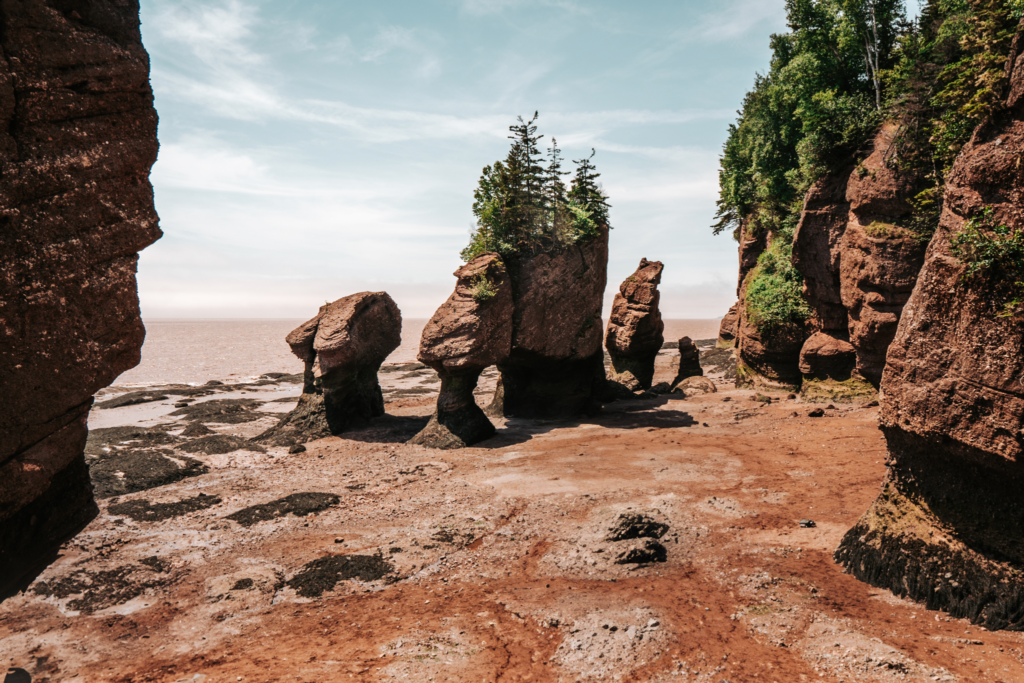
If you’re planning a trip to New Brunswick, visiting Hopewell Rocks Provincial Park should be high on your list. It’s one of the most iconic spots on the Bay of Fundy, famous for its towering flowerpot rock formations and the incredible tides that rise and fall around them each day.
I’ve been to Hopewell Rocks more times than I can count. Growing up nearby in Dieppe, it was a classic school field trip and a go-to stop when family visited from out of town. But the truth is, it never really gets old. The landscape changes by the hour, and every visit feels a little different—especially if you catch both low and high tide in the same day.
In this quick guide, I’m sharing everything you need to know before you go: the best time to visit, how to plan around the tides, how much time you’ll need, and what to bring so you’re ready to explore.
Looking for more New Brunswick travel ideas? Check out my other blog posts for itineraries, hiking trails, and hidden gems across the province!
Quick Guide to Visiting Hopewell Rocks Provincial Park
Where Is Hopewell Rocks?
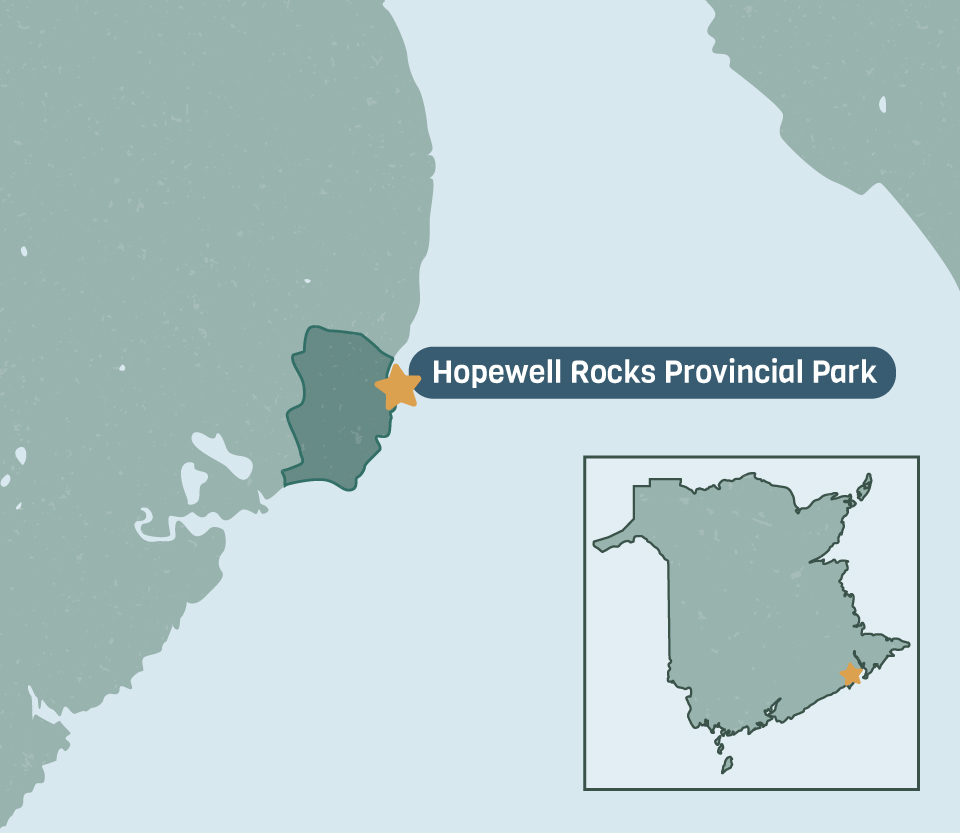
Hopewell Rocks Provincial Park is located along the Bay of Fundy in southeastern New Brunswick, just under an hour’s drive from Moncton. It’s an easy day trip if you’re staying in the city, and also makes a great stop on a coastal road trip between Fundy National Park and Saint John.
The park is right on Route 114, near the village of Hopewell Cape. If you’re already exploring places like Alma, Cape Enrage, or the Fundy Trail Parkway, you can easily work Hopewell Rocks into your itinerary. It’s well signposted and easy to find, and there’s a large parking area once you arrive.
Best Time to Visit Hopewell Rocks Provincial Park
The best time to visit Hopewell Rocks really depends on what kind of experience you’re looking for—but to see what makes this place truly special, you’ll want to time your visit with the tides.
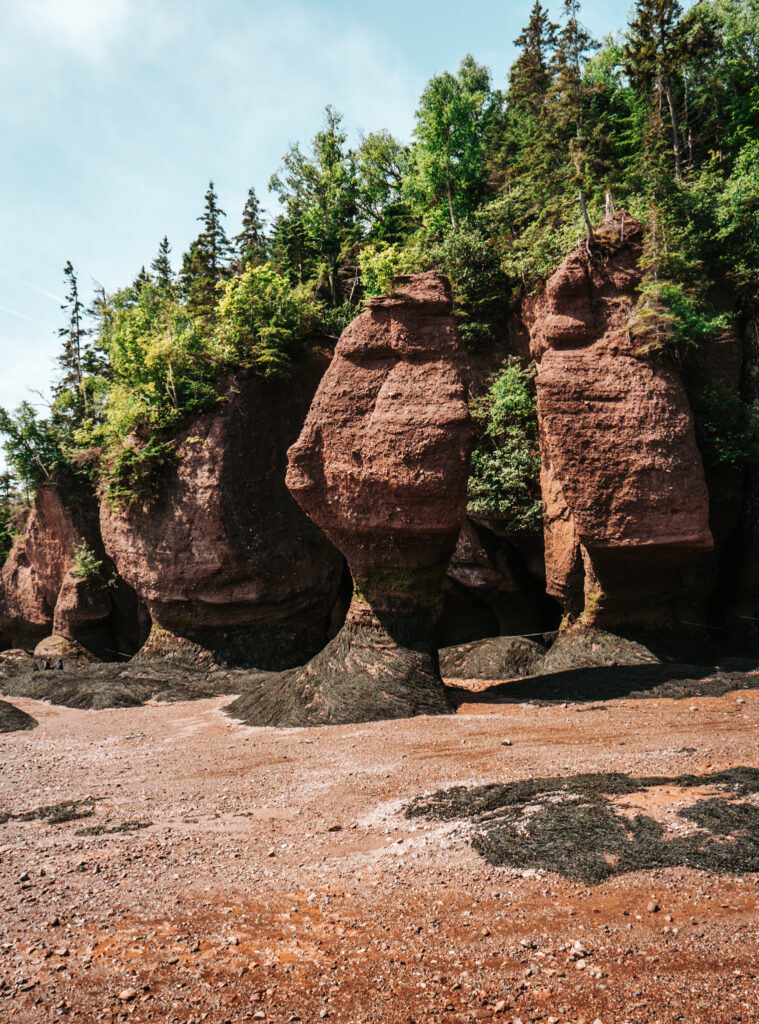
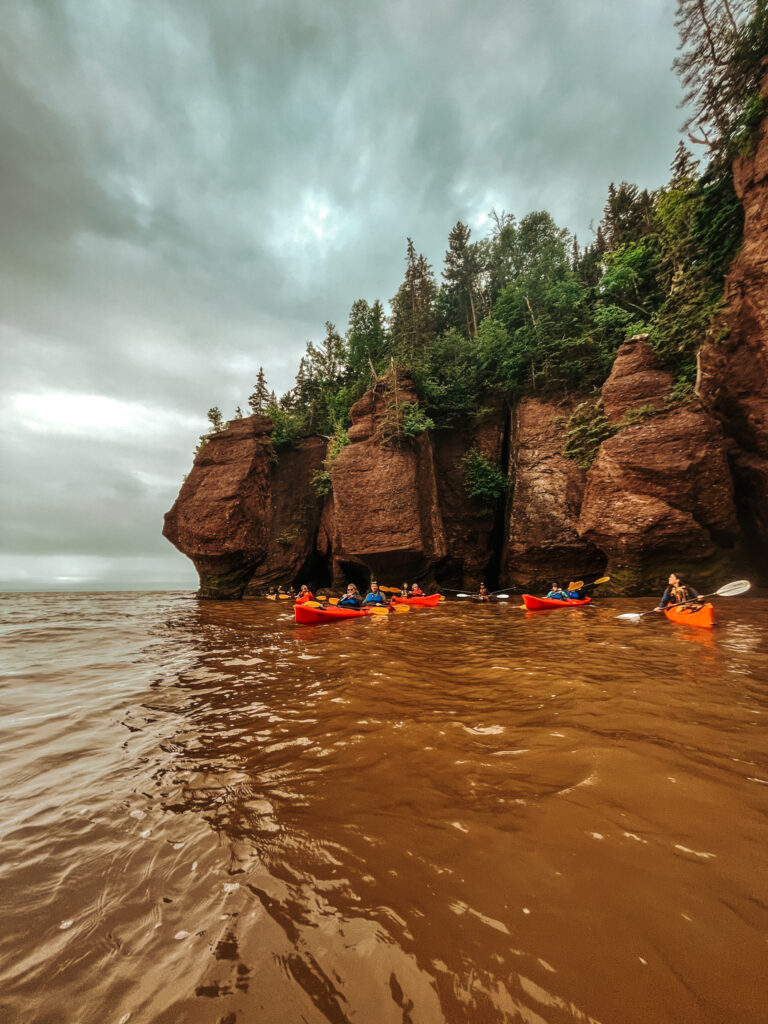
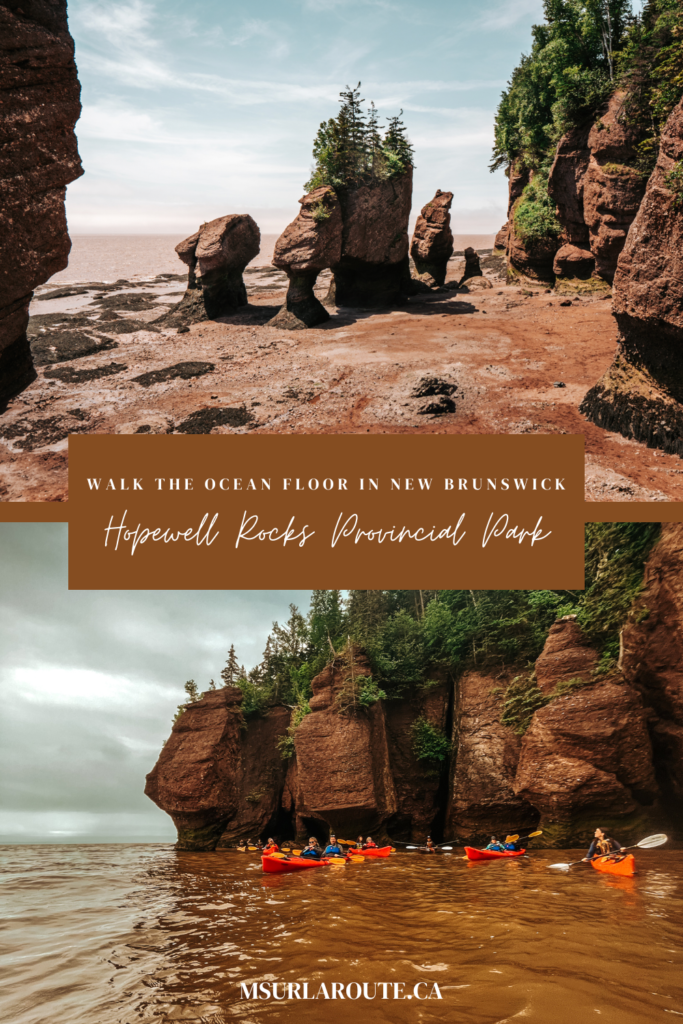
At low tide, you can walk right on the ocean floor among the famous flowerpot rock formations. At high tide, those same rocks are partly submerged, and the area transforms into a stunning paddling route for kayakers. If you can, try to visit twice in one day, once at low tide to explore on foot, and again a few hours later to see the full power of the Bay of Fundy’s tides.
The park is open seasonally from mid-May to mid-October, and peak season runs through the summer months. June to September is ideal for weather, daylight, and tide timing. Early mornings and late afternoons are quieter if you want to avoid the midday crowds.
Travel Tip // Check the official Hopewell Rocks tide tables before your visit. Tides shift daily, and knowing the timing ahead of time will make all the difference.
How Much Time Do You Need at Hopewell Rocks?
You don’t need an entire day at Hopewell Rocks, but how much time you spend really depends on how you want to experience it. If you’re just stopping by to catch low tide and explore the ocean floor, 2 to 3 hours is usually enough for a relaxed visit. That gives you time to walk the trails, head down to the beach, and take plenty of photos.
If you’re planning to see both high and low tide, you’ll need to factor in the timing. The full tidal cycle takes about 6 hours, so many visitors explore the area at low tide, take a break nearby (maybe in Alma or at Cape Enrage), and return later for high tide views or a kayaking tour.
There’s also a shuttle on-site that can take you from the visitor centre down to the viewing area if you’re short on time or don’t want to walk the trail both ways.
Travel Tip // Don’t rush it. Seeing the landscape transform between tides is one of the most memorable parts of visiting the park.
What to Expect at Hopewell Rocks Provincial Park
Visiting Hopewell Rocks Provincial Park is straightforward, beautiful, and incredibly rewarding, especially if you plan your visit around the tides. When you arrive, you’ll find a visitor centre, a small café (open seasonally), washrooms, and a gift shop. From there, it’s about a 15- to 20-minute walk down a wide gravel path to reach the main viewing area. If you’d rather save your steps for the beach, there’s also a shuttle available for a small fee.
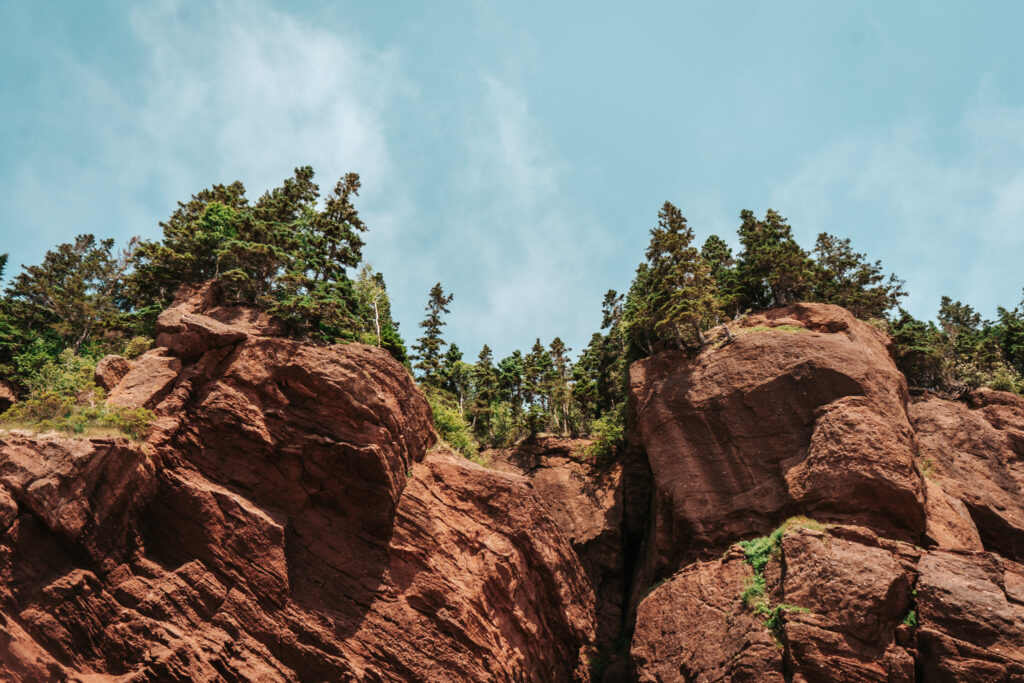
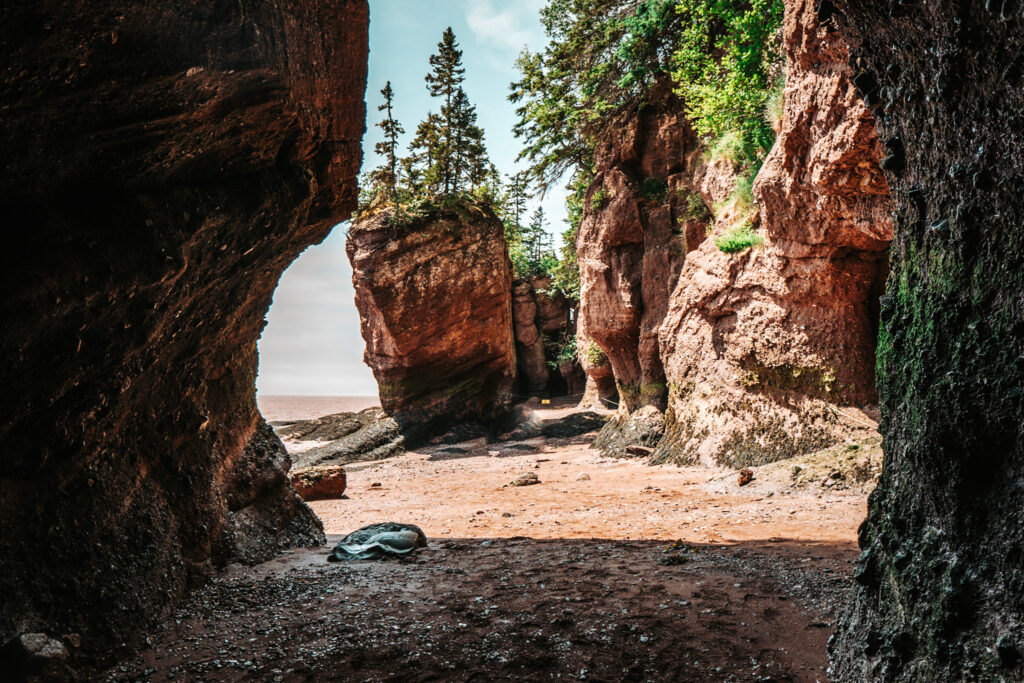
Once you reach the platforms, you’ll get your first sweeping view of the famous flowerpot rocks, formed by thousands of years of tidal erosion. At low tide, you can take the stairs down to the ocean floor and walk right among these towering formations. The beach is rocky and often muddy—bring proper footwear and expect to get a little messy (it’s worth it).
In addition to the beach area, the park also offers a few short hiking trails with forested paths and scenic viewpoints that are often much quieter than the main site.
Highlights of Visiting Hopewell Rocks
There’s something magical about standing on the ocean floor and looking up at the cliffs above you, knowing that in a few hours, the sea will return and cover it all. The way the Bay of Fundy tides transform the landscape here is nothing short of incredible—and watching that change happen in real time is one of the most unique travel experiences in Canada.
Some of my personal highlights include:
- Walking through narrow rock arches and coves at low tide
- Watching the tide slowly flood the same beach you just explored
- Quiet morning walks along the upper trails before the crowds arrive
- Photographing the flowerpot rocks from the lookout during golden hour
Why You Should Kayak at High Tide
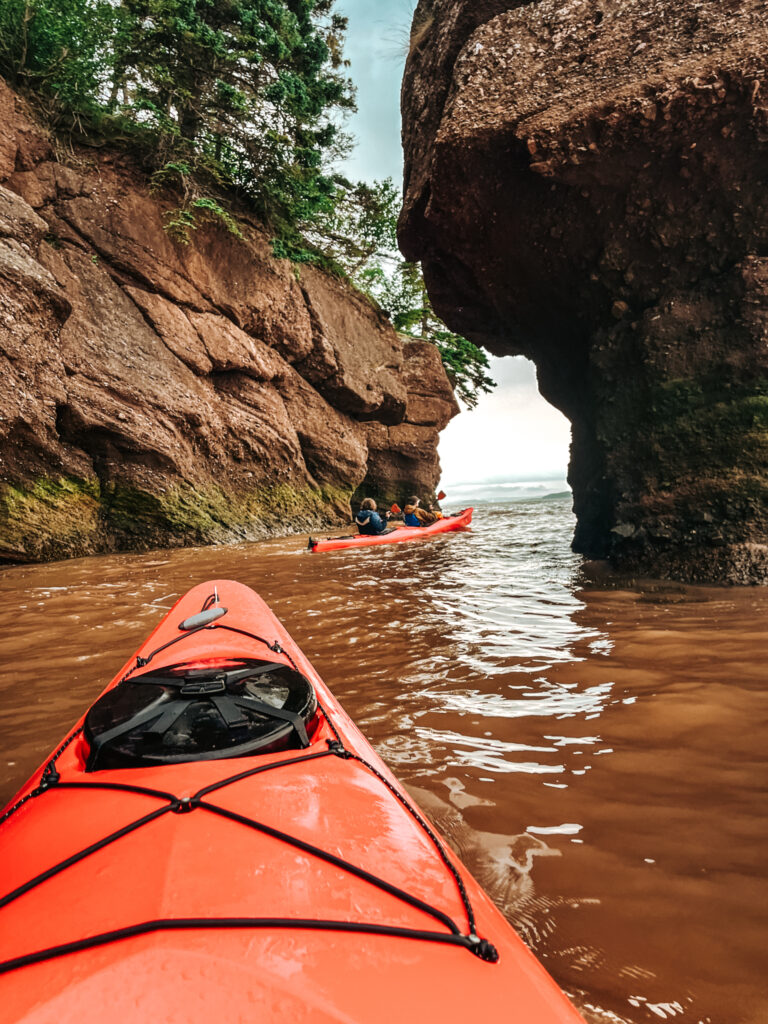
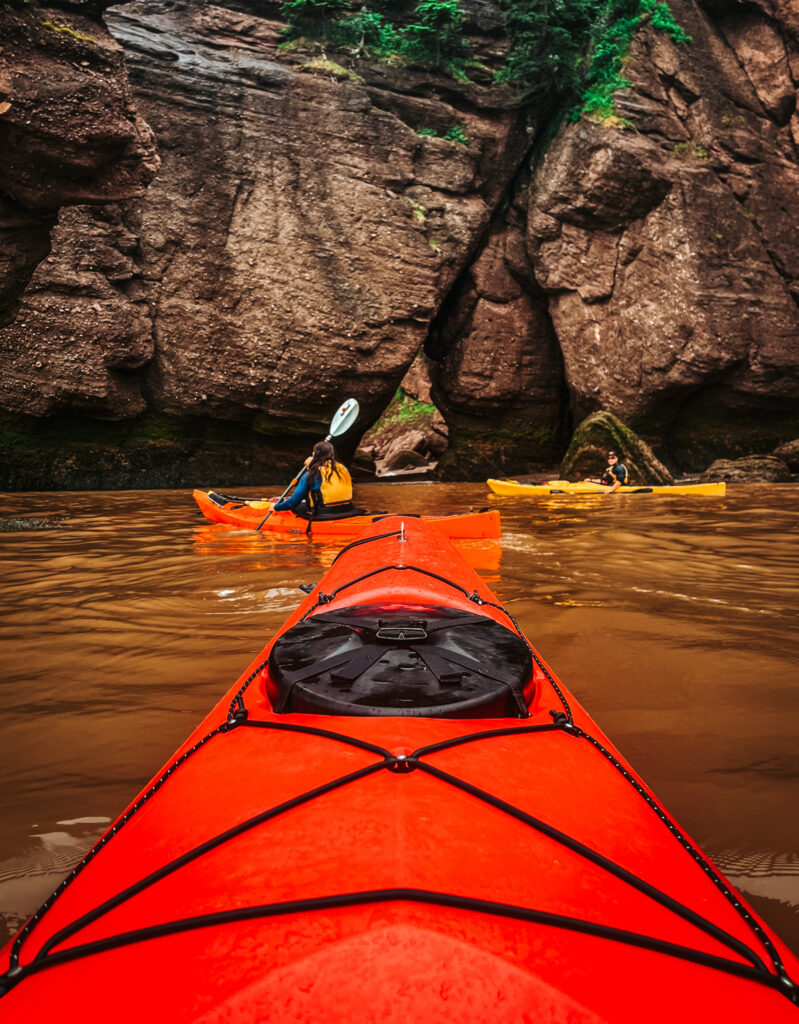
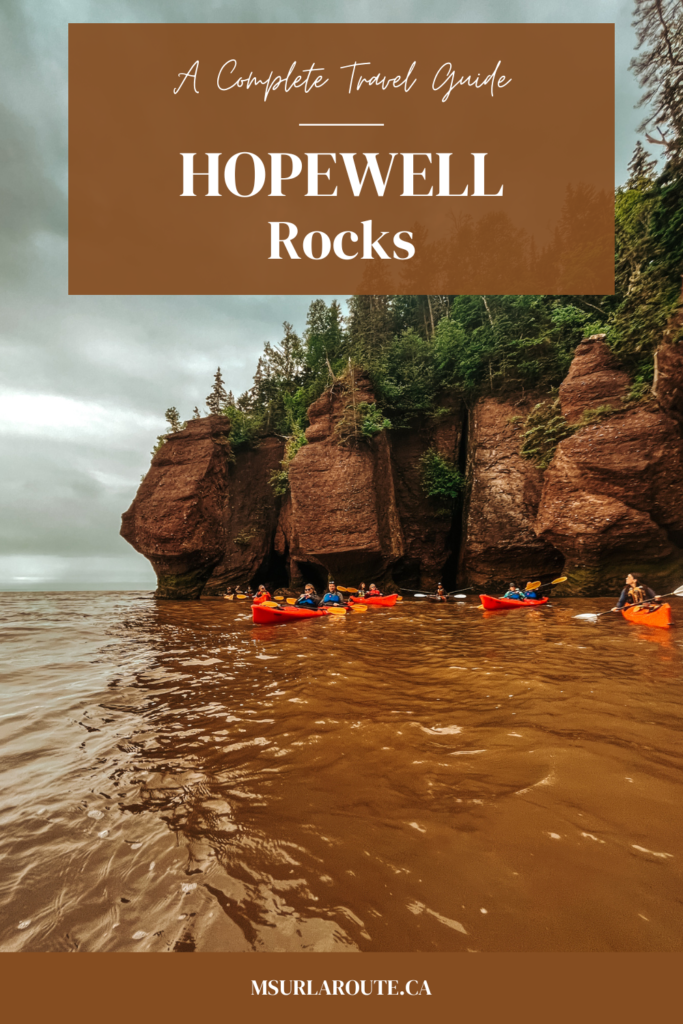
While most people come to Hopewell Rocks for low tide, kayaking at high tide offers a completely different kind of experience—and it’s just as unforgettable. When the water rises, the towering rock formations become scattered sea stacks, and kayaking around them feels like drifting through a natural sculpture garden.
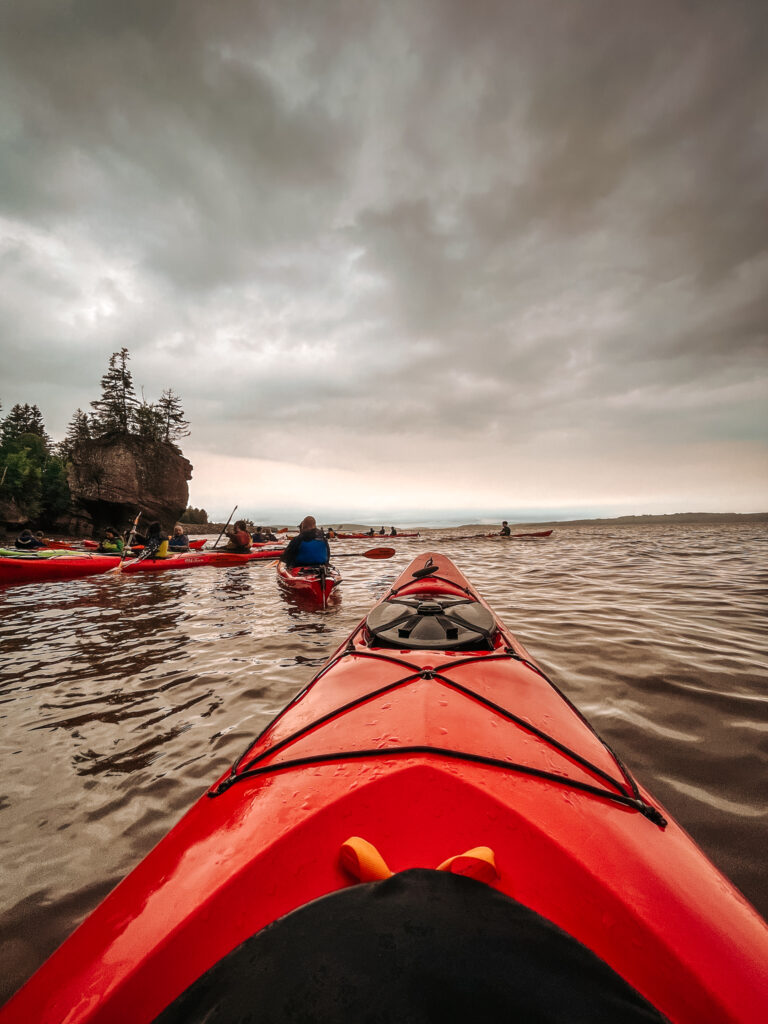
Local company Baymount Outdoor Adventures runs guided “Kayak the Rocks” tours timed perfectly with the tides. These tours are beginner-friendly and include everything you need. You’ll paddle through arches, into quiet inlets, and between the massive flowerpot rocks as the tide rolls in. It’s peaceful, surreal, and the best way to understand just how powerful the tides are in this part of New Brunswick.
Travel Tip // If you want to do both experiences in one day, visit the park at low tide in the morning to explore on foot, then return in the afternoon for your high tide paddle.
Entrance Fees and Practical Info
Hopewell Rocks Provincial Park is a seasonal site, open each year from mid-May to mid-October. Exact dates can vary slightly, so it’s always a good idea to double-check the official website before your visit.
As of the most recent info, general admission fees are:
- Adults (ages 19–64): $14 CAD
- Seniors (65+): $12 CAD
- Youth (5–18): $8 CAD
- Children under 5: Free
- Family rate (2 adults + children): $38 CAD
Prices are subject to change, so check thehopewellrocks.ca for the latest updates.
Your ticket gives you access to the park for the entire day, which means you can leave and come back later to catch the tides at a different stage, perfect if you want to see both low and high tide on the same visit.
Accessibility Note: The viewing platforms are accessible, but the stairs down to the ocean floor are not. However, you’ll still get a great view from above if mobility is a concern.
Tide Info: Tides are everything here. Check the Hopewell Rocks tide tables to plan your timing before you go.
Final Thoughts
Hopewell Rocks Provincial Park is one of those rare places that truly lives up to the hype. It’s easy to visit, endlessly photogenic, and packed with natural wonder—especially if you catch both the low and high tides. No matter how many times I go, it still feels surreal to walk on the ocean floor in the morning and see it completely underwater by the afternoon.
If you’re planning a trip to New Brunswick or driving along the Bay of Fundy coast, this is one stop you won’t want to miss. Save this guide for your visit, and let me know in the comments if you’ve been before or if it’s on your list!
Looking for more New Brunswick travel ideas? Check out my other blog posts for itineraries, hiking trails, and hidden gems across the province!
PIN THIS FOR LATER

Follow me on Instagram!
I almost made a very different version of this reel.
Last time I posted about Smiths Falls, the comments surprised me and a lot of them seemed to come from people who actually live there. There’s nothing to do here. It’s boring. My first instinct was to make a whole clap-back video, screenshots and all.
But honestly? I get it. Nobody is a tourist in their own town. The canal is just the thing you cross on your way to work. The museum is where you went once on a school trip in grade four. When you see a place every single day, it goes invisible.
I grew up near the Bay of Fundy – home of the highest tides on the planet – and as a kid I thought it was the most boring place on earth. It took moving away to realize people cross oceans to see what was in my backyard.
So this reel is me being a tourist in your town for you. The 1912 bridge you’d paddle under if you hadn’t stopped noticing it. The museum where you can climb into the trains, and even sleep in one. The thrift trail. The mural. All of it.
To everyone who’s never been: this is your sign for an easy day trip from Ottawa or Kingston.
And to Smiths Falls locals: I dare you to do one thing from this list this weekend. Report back. 😌
What’s the thing in YOUR town that you’ve stopped noticing? I want to hear it.
🇫🇷 La version française est dans les commentaires.
#SmithsFalls #RideauCanal #OntarioDayTrip #ExploreOntario #smalltownontario


I have a confession: half my road trips are reverse-engineered.
I don’t pick a destination and find a coffee shop nearby. I pick the coffee shop, then build a whole day around justifying the drive. A hike here, a beach there, some antiquing, all very respectable cover stories for the fact that I drove two hours for an iced latte.
Because here’s what I’ve figured out after years of crisscrossing Ontario: the best coffee shops are never just coffee shops. They’re the unofficial welcome centre of every small town. The barista knows which trail is muddy this week. The regulars will tell you where to park for free. The bulletin board has better local intel than any travel blog, mine included.
So this list isn’t really about coffee. It’s about the 12 places I use as an excuse to keep exploring this province. Swipe through, every single one comes with what to pair it with so you can build your own cover story.
From Thunder Bay to the County, consider this your permission slip to drive unreasonably far for caffeine.
Which one’s closest to you? And more importantly, what’s YOUR coffee shop worth driving for? I’m always taking notes. ☕
🇫🇷 La version française est dans les commentaires.
#OntarioCoffeeShops #OntarioRoadTrip #DiscoverOntario #OntarioTravel #SmallTownOntario

For over a hundred years, the men who lived in this house woke up, looked at the lake, and went to work captaining the Wolfe Island ferry. Three generations of them. Same water, same crossing, every day.
I thought about that a lot during my stay at @themullinhouse_ (mainly from the bathtub, because the tub faces the lake and once you’re in it there’s no reason to be anywhere else.)
The Mullin House just opened as a stay, and those who brought it back to life did it in the best way that possible. Keeping the soul of the place.Places with an actual story make my job as a photographer easy. I just have to pay attention.
And if you want to stay here too: It’s a free 20-minute ferry from Kingston, 5 bedrooms, sleeps 10. So this is your sign to plan the group trip you keep talking about.
Save this for when you book it, and be honest, would you make it out of that bathtub by checkout?
Thank you to @themullinhouse_ for having me!
🇫🇷 La version française est dans les commentaires.
#wolfeisland #kingstonontario #thousandislands #exploreontario #ontariotravel

I grew up an hour from the Bay of Fundy. And every few years, my school would pile us onto a bus and take us to Hopewell Rocks or Fundy National Park. And every single time, as a kid, I thought : ‘okay, cool. Rocks. Trees. Can we go home now?’
I had absolutely no idea what I was standing next to.
It took me leaving New Brunswick, travelling across the country before I came back to the Bay of Fundy as an adult and genuinely had my breath taken away. I grew up next to one of the most extraordinary places on the planet and completely took it for granted. And I think a lot of Maritimers probably feel the same way.
This carousel is my attempt to fix that, for myself, and for anyone who’s never made the trip. Scroll through and I’ll show you exactly how I’d plan a road trip along the New Brunswick side, from the tidal flats to the coastal cliffs to the little fishing towns that feel completely frozen in time.
And if you have extra days to spare, Saint John is absolutely worth a stop, underrated city, great food scene, and it sits right on the bay.
I’m also heading back this summer to try a stay I’ve had my eye on for a while, I genuinely cannot wait to tell you all about it. 👀
Save this for your New Brunswick road trip. 🙌
👇 Have you ever been to the Bay of Fundy? Were you as underwhelmed as I was at 10 years old? 😄
🇫🇷 La version française est dans les commentaires.
#BayOfFundy #NewBrunswick #ExploreCanada #CanadaTravel #FundyNationalPark

I’ll be honest, when I pulled up to @whispering_springs I didn’t know what to expect. I’d seen the photos, I’d read the website, but nothing really prepares you for the moment you walk into your safari tent and realize this might actually be nicer than your apartment.
We’re talking a king bed, more space than I expected, and an actual bathtub, in a tent. I took a bath. In the woods. And I would do it again without hesitation.
Oh and the s’mores bar? Someone thought really hard about what would make people unreasonably happy at the end of a summer night and they nailed it.
Save this for your summer planning because at 90 minutes from Toronto there is really no reason to wait.
Now tell me have you ever gone glamping? If not, what are you waiting for!
🇫🇷 La version française est dans les commentaires.
#OntarioGetaway #GlampingOntario #OntarioTravel #WeekendGetawayOntario
ExploreOntario
